ARTICLE
How Quro Medical is redefining where - and how - patients receive care
25 August 2026
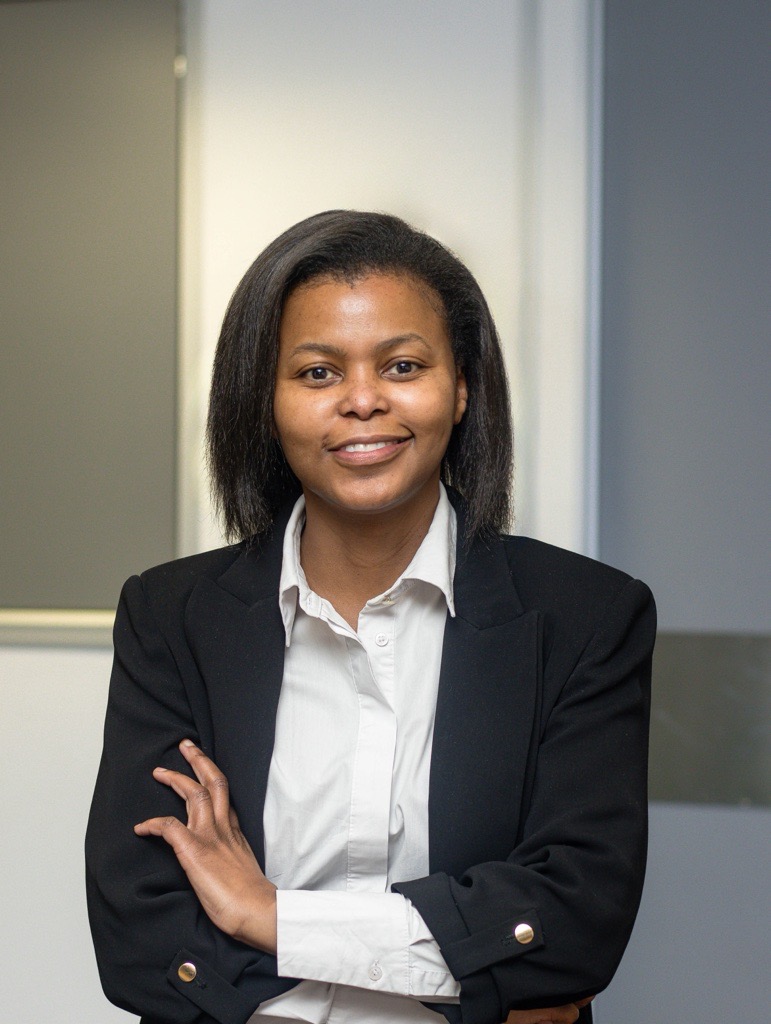
Zikho Pali is the Co-Founder and Chief Operations Officer of Quro Medical, a South African technology-enabled hospital-at-home care provider that has been reshaping how and where patients receive clinical-grade care since 2018. In a recent interview with Executive Forecast - a leading global platform covering leadership and innovation in the life sciences sector - Pali spoke candidly about the founding insight behind Quro Medical, the company’s strategic partnership with Netcare, the role of data and technology in personalised patient care, and her vision for the future of African healthcare. This article draws on that conversation.
When Zikho Pali and Dr Vuyane Mhlomi looked at the South African healthcare landscape in 2018, the picture was stark. Two compounding crises - unacceptably unequal access to healthcare, and escalating costs driven primarily by avoidable hospitalisation - demanded a fundamentally different approach. Rather than working around the edges of a broken system, the Quro Medical team chose to start from first principles.
“Everything we built flowed from our understanding of the problem and how we believed it could be solved,” Pali explains. “Even as we were grappling with its complexity, we were completely aligned on one thing: there was a real opportunity for an entrepreneurial solution to address a challenge as entrenched as this one.”
That conviction gave rise to Quro Medical - a technology-enabled hospital-at-home care provider built to bring clinical-grade care into the patient’s own home.
Eight years on, Quro Medical is no longer proving a concept. For Pali, 2026 is the year hospital-at-home moves from novelty to standard of care.
“Our ambition is to establish technology-enabled hospital-at-home not just as a clinical option, but as something the broader healthcare ecosystem recognises as a normal part of the patient care continuum,” she says. “That shift in perception (from novelty to standard of care) is what we are working toward this year.”
A strategic partnership with Netcare which is a South Africa’s only fully digitised hospital group, is accelerating that mission. For Pali, the partnership is about more than investment; it represents a powerful alignment of values and a complementarity of capabilities that neither organisation could achieve alone.
“The challenges we are grappling with in healthcare are far bigger than any single idea or organisation can address alone,” Pali notes. “Netcare is the only fully digitised hospital group in South Africa, and that naturally lends itself to an organisation like ours with a heavy focus on digitisation and innovation. The synergies were evident from the very beginning.”
Together, the two organisations are pursuing initiatives they believe will benefit the health system as a whole - embedding technology-enabled home-based care into the mainstream health continuum.
The relationship between hospital and home is shifting. Pali sees a future in which hospitals move away from operating in isolation and integrate more deeply into the broader patient care continuum. The fragmentation that currently exists in South Africa’s healthcare system, she argues, is directly impacting outcomes and quality of care.
“Hospitals will remain important, but increasingly patients will receive the appropriate level of care at the right time and, critically, in the right place,” says Pali. “Models like ours, built around where patients actually live, will become more widely embraced as trust in home-based care continues to grow.”
Over time, she envisions hospitals becoming environments primarily for the acutely ill - patients who genuinely cannot be managed outside a clinical facility, while home-based care absorbs an increasing share of appropriate patient management.
Historically, hospital performance was measured by infrastructure and bed occupancy. That is changing. Pali points to a clear and growing shift toward holding healthcare facilities accountable for actual patient outcomes.
“It is no longer sufficient to have state-of-the-art technology; what funders and other stakeholders are now placing emphasis on is results,” she explains. Quro Medical plays a direct role in that shift, enabling earlier discharge from hospital settings, reducing patient length of stay, and helping prevent avoidable readmissions.
“We see ourselves playing a critical role in enhancing the outcomes of traditional facilities, not competing with them.”
At the core of Quro Medical’s model is data, but not data collected for its own sake. In a typical general ward admission, vital signs are collected on an ad hoc basis. In Quro Medical’s model, that data is collected continuously.
This personalised approach represents a significant departure from the generic treatment protocols of traditional ward settings, and it is only possible because of the technology infrastructure Quro Medical has built.
Quro Medical’s recent win of the Best Innovator award at the BHF Titanium Awards shone a spotlight on the company’s team, and for Pali, the recognition goes deeper than a trophy on a shelf.
“When I talk about making healthcare more accessible, I am not only referring to financial accessibility,” she says. “I am talking about bringing healthcare into an environment where the power dynamic is far more neutral. Our clinicians play a critical role in demystifying healthcare for patients, for their families, for their next of kin.”
Much of the work that makes this possible, Pali emphasises, falls outside any job description. Staff consistently go above and beyond to ensure patients feel genuinely cared for - contributions that are difficult to capture in a metric but are central to the company’s mission.
Quro Medical’s north star is to push the boundaries of innovation to deliver premium healthcare solutions that are more accessible and more affordable for everyone. In practice, that mission rests on two pillars that the company insists are complementary, not mutually exclusive: delivering high-quality healthcare in a way that is both affordable and accessible.
“Every new wearable we introduce, every development to our software platform, every care pathway we build is tested against those pillars,” Pali says. “If something falls short on either dimension, it does not move us.”
Building a sustainable healthcare company means building a sustainable team. For Pali, retaining talent deserves at least as much thought as attracting it - and the principle is simple, even if maintaining it is not.
“You can maintain very high standards while still treating people with dignity,” she says. “Whether things are going well or not, we approach our staff with that same principle. We do not lower our standards, but we also do not compromise on how we treat people.”
On the broader question of creating jobs and drawing young people into healthcare, Pali points to demand as the foundation. If a solution genuinely serves patients, supports clinicians, and helps funders operate more sustainably, demand follows. And sustainable demand, she argues, is what makes it possible to grow, to hire, and to keep investing in the next generation.
Managing rapid growth since 2018 has presented its own set of leadership challenges, but for Pali, the approach has remained constant: do not abandon your principles.
For Quro Medical, that guiding principle is clear: compromising patient care is never acceptable.
“Growth is only meaningful if it does not cost you what you built.”
Asked what advice she would give to young women looking to build careers in healthcare leadership, Pali is direct: believe that you belong.
“You belong in rooms where important decisions are being made, and you have a role to play in solving the complex challenges the world faces today,” she says. “From there, be very intentional about developing the capabilities that are relevant to where you want to go. And invest seriously in developing your judgement.”
Pali speaks from experience. Walking into environments where there are not many people who look like her, she says, sound judgement has been the thing that has consistently shifted the focus from who she is to what she brings. She encourages any young woman to start building that as early as possible.
Finally, she points to representation. “Align yourself with women who are where you want to be. Call it mentorship or something else, but the principle holds: representation matters. Sometimes you need to see a visual representation of where you want to go before you can truly believe it is possible.”
This article is based on a conversation originally published by Executive Forecast on 25 August 2026.
For more about Quro Medical, visit www.quromedical.co.za
